

Middle East oil producers are slashing prices to attract buyers as a sharp recovery in flows through the Strait of Hormuz tips the global crude market towards oversupply – a preview of the crowded, hyper-competitive oil market that the Iran war may leave in its wake.
Global benchmark Brent crude tumbled more than 17 per cent last week to around $97 a barrel, its steepest weekly decline since the 2020 pandemic. The slump followed the electoral rout of US President Donald Trump’s Republican Party in the US midterm elections, which raised expectations that Washington could swiftly de-escalate the war that has upended energy markets since February 28.
Regardless of whether Washington and Tehran secure a durable peace deal in the coming weeks, the market faces the prospect of a crude oil glut – a surprising outcome at the end of a year that has featured one of the biggest energy supply shocks in modern history.
Yet even though crude is flowing out of the Persian Gulf, the global oil market is far from its pre-war normal. Demand remains constrained by elevated prices and limited refining capacity, while global inventories are depleted.
Rapid recovery
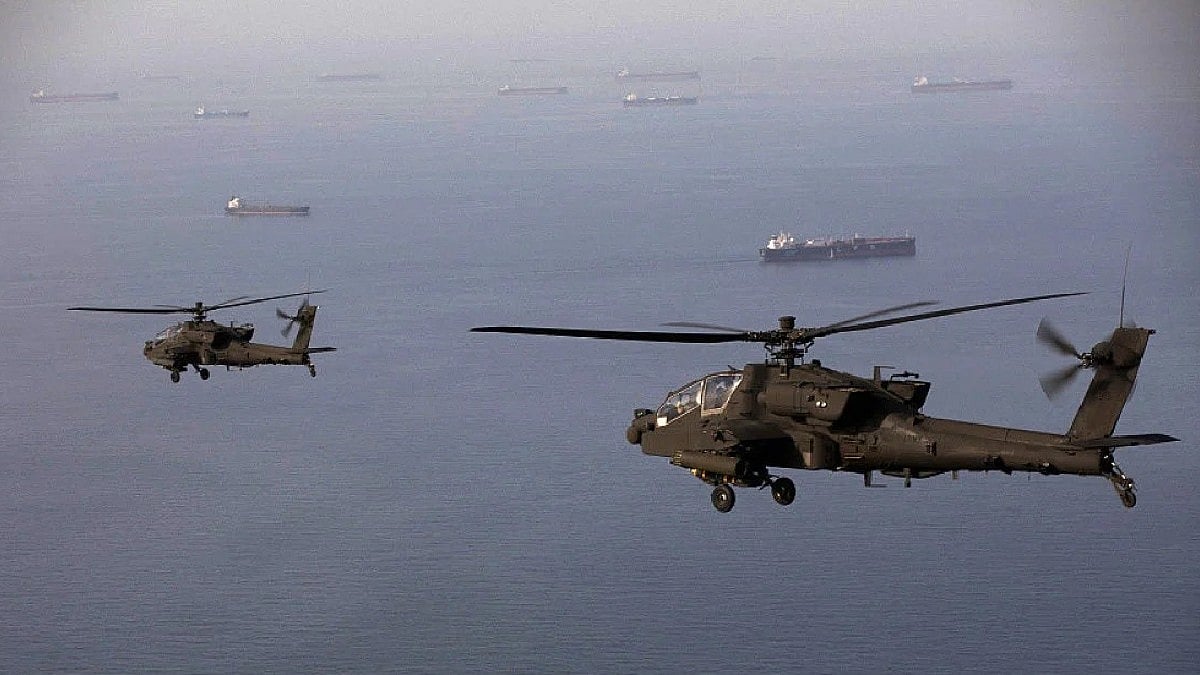
Oil exports through Hormuz have recovered sharply since September, as gulf producers can now navigate the narrow waterway using tanker convoys protected by the US Navy.
Crude exports through the strait averaged 10.3 million barrels per day in October, up from virtually zero in the first month of the war, excluding Iranian shipments. That compares with a pre-war average of 13.5 million bpd, according to Kpler data.
The recovery looks even more striking when alternative export routes through Saudi Arabia’s Red Sea port of Yanbu and the United Arab Emirates’ Fujairah terminal are included. Total regional crude exports reached 16.6 million bpd in October, just shy of the pre-war average of 17 million bpd, Kpler data showed.
At the same time, producers outside the Middle East have responded to the wartime supply shock by increasing output, particularly in the US, Brazil and Canada.
Global crude production reached 85 million bpd in October. That’s not only the highest since the start of the war, but also above the five-year average of 83 million bpd, according to consultancy Energy Aspects.
By almost any measure, the world is set to be awash in crude.
Global competition
Price signals certainly point to oversupply.
Saudi Arabia cut the December price of its flagship Arab Light crude for Asian customers by $2 a barrel from November, pushing the discount against the Oman/Dubai average to $6.50 a barrel, the lowest since the pandemic in May 2020.
Spot premiums for Middle Eastern crude benchmarks have also collapsed. Oman’s premium to the Dubai benchmark dropped from $34 a barrel in mid-September to just 95 cents last Tuesday, its weakest since July, before recovering slightly to $1.76 on Thursday, Reuters data showed.
The sharp discounts have several drivers, including compensation for elevated freight costs. Iranian attacks on vessels transiting Hormuz continue on a near-daily basis, despite US escorts, forcing many producers to resort to expensive ship-to-ship transfers in the Gulf of Oman. This has sent tanker freight rates soaring, with shipping costs now averaging around $30 a barrel, compared with roughly $5 before the war.
But the steep discounts gulf producers are offering also reflect growing competition to attract a limited number of buyers.
Global refining capacity has declined significantly this year due to damage in the Middle East and Ukrainian strikes on Russian energy infrastructure. This, in turn, has reduced refiners’ ability to turn much of the recovering crude supply into gasoline, diesel and other fuels.
Refiners now have a much wider choice of feedstocks, but their demand remains depressed.
In normal times, such an imbalance would force producers to cut output or push surplus barrels into storage.
But storing oil is uneconomical. Continued uncertainty surrounding the Middle East conflict has kept prompt Brent prices at a sharp premium to future-dated contracts, a market structure known as backwardation. Paying to store a commodity today that must be sold later at a lower price makes little economic sense.
That leaves producers with fewer options for dealing with the growing surplus and intensifies pressure to compete for buyers. The best way to do that is by lowering prices.
Not so fast
There are several important caveats to this glut narrative.
For starters, depressed demand could rebound. High fuel prices this year have forced many consumers to cut consumption, while some Asian countries have resorted to fuel rationing. JPMorgan estimates that global oil consumption has fallen by around 3.3 million bpd since the start of the war. If some of that demand was not destroyed but simply delayed, consumption might surge if prices fall.
Damaged refineries could also return to operation sooner than anticipated, especially if there are breakthroughs in the wars in Iran or Ukraine.
Moreover, a return to prolonged fighting in Iran could curb supply, though the White House will almost certainly want to avoid this.
On the other hand, a durable settlement between the US and Iran that restores normal passage through Hormuz would likely slash freight and security costs and allow gulf producers to move even more crude onto a market where the US, Brazil, Canada and other suppliers have already boosted output.
Gulf states, meanwhile, will have every incentive to maximise volumes and revenues as they repair the economic damage inflicted by the conflict and seek to replenish state coffers.
The Iran war created an extraordinary energy shortage, yet the end of the conflict could create a market with more crude than producers know what to do with. The old energy market is gone, and the new one is going to be far more crowded.
Republished from Baird Maritime.
View the original at Baird Maritime →Source: Baird Maritime
Industry News
Get the headlines that matter
Shipping, maritime, and oil and gas news curated daily by the MarineCraft News Desk, with Malaysian and Southeast Asian developments front and centre.
We use your address only to send Industry News. Unsubscribe any time. See our Privacy Policy.