
Brent$89.42(≈RM365)▼ -0.60%WTI$83.93(≈RM343)▼ -0.38%Nat Gas$2.75(≈RM11)▲ +0.36%Bunker$816.00(≈RM3,331)Tapis$86.75(≈RM354)JKM LNG$21.37(≈RM87)▼ -0.28%MGO$1205.00(≈RM4,919)EU Carbon€82.02(≈RM384)TTF Gas€58.67(≈RM275)▲ +0.36%Diesel$4.19(≈RM17)▼ -1.87%Coal$130.60(≈RM533)USD/MYR4.0825US Rigs551▲ +7 M/MRON95RM3.82(≈US$0.94)▲ +5.52% W/WRON97RM4.40(≈US$1.08)▲ +4.76% W/WDieselRM4.62(≈US$1.13)▲ +4.52% W/W
05:15 MYT
Commodities Trading
Bulk supply for maritime sector
Life-Saving Equipment
LSA supply & certification
Firefighting Equipment
Marine & industrial fire systems
Manpower Supply
Skilled maritime personnel
Drone Training
UAV pilot certification

Drone Training Services

Drone Training Services

Regulatory approval to fly is the minimum standard. Knowing what to do when something goes wrong is the actual competency.

Commercial UAV operations in Malaysia require more than a registration number and a basic pilot certificate. The operating environment — offshore platforms, vessel decks, industrial infrastructure, coastal areas — introduces hazards that recreational training does not address. We provide structured UAV training programmes for operators working in maritime, offshore, and industrial environments.
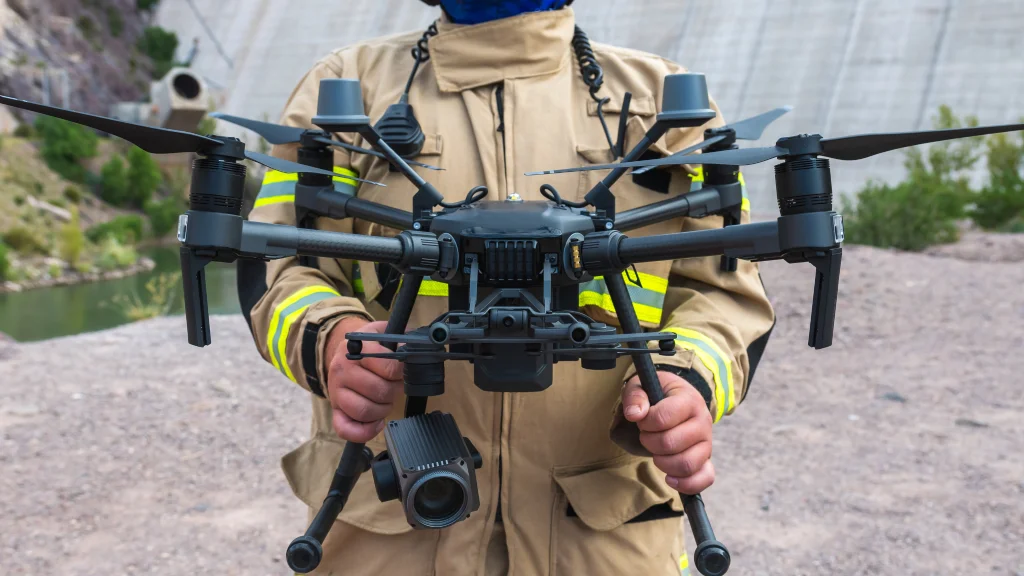
Drone operated by a person
Our credentials
Certifications heldDOSHCIDB
Training focusMaritime, offshore, and industrial UAV operations
CoveragePeninsular Malaysia, Sabah, Sarawak
Group bookingsAvailable on request

How UAV regulations and operational requirements work in Malaysia

📜
Malaysia’s civil aviation UAV framework and what commercial operations require
The Civil Aviation Authority of Malaysia (CAAM) regulates unmanned aircraft operations under the Malaysian Aviation Consumer Protection Code and associated directives. Commercial operations — defined as any flight where economic value is derived — require operator registration, UAV registration for aircraft above a specified weight threshold, and in many cases an operating approval for specific operational categories. Many operators conducting commercial work are not aware that their activity falls outside the scope of their registration category.
🚢
Maritime and offshore UAV applications — where they add real operational value
UAVs are increasingly used for hull inspection, flare stack inspection, mooring line surveys, cargo monitoring, and search-and-rescue support in the maritime and offshore sector. Each of these applications has specific equipment requirements, risk profiles, and regulatory constraints. The value of a UAV inspection programme depends entirely on the operator understanding what the UAV can and cannot reliably capture — and planning the mission accordingly.
🎯
The gap between recreational and commercial operator competency
Recreational UAV experience builds basic aircraft handling skills. It does not build the situational awareness, pre-flight planning discipline, or emergency response procedures that commercial operations require. Working near vessels, platforms, and industrial infrastructure introduces proximity hazards, electromagnetic interference, and regulatory airspace restrictions that recreational flying rarely encounters. The gap is not one of flying hours — it is one of decision-making frameworks.
📊
What incident investigations consistently show about undertrained operators
Analysis of UAV incidents in industrial environments consistently identifies two root causes: inadequate pre-flight site assessment and failure to execute a pre-planned emergency procedure when the aircraft behaved unexpectedly. Both are trainable behaviours. An operator who has practiced emergency procedures under instruction will execute them under pressure. One who has not will improvise — and improvisation with a UAV near infrastructure rarely produces a good outcome.

What every commercial UAV operator should verify before each operation

The pre-flight checklist is where commercial operations most commonly diverge from recreational practice. A recreational pilot checks that the aircraft is functional and the battery is charged. A commercial operator working in an industrial environment must additionally verify airspace restrictions, site-specific hazards, emergency landing zones, communications coverage, and the operational limits of their specific aircraft model.

In the offshore context, additional considerations apply: radio frequency interference from platform equipment, restricted airspace around helicopter landing zones, and the requirement for a permit-to-work before any inspection flight above or near live equipment. These are not bureaucratic requirements — they are safety controls that experienced operators treat as non-negotiable.

Insurance is the often-overlooked final check. Most personal UAV insurance policies explicitly exclude commercial operations. An operator conducting a paid inspection flight on a standard recreational policy has no coverage if the aircraft causes damage or injury — and the liability falls to the individual, not the platform operator.

Pre-operation compliance checklist
UAV registration current and aircraft within registered weight classCAAM registration required for commercial operations above threshold weight
Operator certificate valid and in-scope for planned operation typeConfirm operational category covers the specific activity — not just the location
Airspace check completed and any required approvals obtainedCheck NOTAM and CAAM airspace restrictions for the operating area
!
Site survey completed and hazards documented before flightFor offshore and industrial sites, permit-to-work is typically required
!
Emergency procedure briefed and emergency landing zones identifiedOver water and over live equipment, emergency options are limited — plan them in advance
!
Commercial operations insurance confirmed in force for this activityRecreational policies typically exclude commercial operations — verify the policy wording

Structured UAV training for commercial and industrial operators

Each programme is designed for operators working in specific environments, not general-purpose pilot training. Practical assessments are conducted in realistic operating conditions.

🚀
Foundation UAV Pilot Programme
Core theory and practical skills for commercial UAV operations. Covers Malaysian regulatory framework, pre-flight planning, normal and emergency procedures, and airspace awareness.
For: New commercial operators
🚢
Maritime Operations
Vessel and offshore platform inspection techniques. Operating over water, near structures, and within maritime airspace constraints. Includes platform permit-to-work procedures.
For: Marine and offshore operators
🏭
Industrial Survey & Inspection
Infrastructure inspection methodology for pipelines, flare stacks, storage tanks, and industrial structures. Camera settings, data capture protocols, and reporting standards.
For: Oil, gas & industrial operators
🎯
Advanced Manoeuvring & Emergency Procedures
Confined-space flight, proximity operations, and rehearsed emergency scenarios. Conducted in realistic operating environments with instructor debriefs.
For: Experienced operators upskilling
👥
Group & Corporate Training
Tailored programmes for teams deploying UAVs as part of inspection or monitoring operations. Curriculum adapted to the client’s specific aircraft and operating environment.
For: Operators, contractors, asset owners
📝
Regulatory Compliance Review
Audit of existing operations against current CAAM requirements. Identifies gaps in registration, insurance, and operational approvals before a planned programme begins.
For: Operators already flying commercially
Get in touch
If you’re planning a UAV programme or have a question about regulatory requirements, we’re happy to advise.
Whether you need a single operator trained, a team programme, or a compliance review of your existing operations, our team can help. We respond to all enquiries within one business day.