A Very Large Crude Carrier (VLCC) is a crude-oil tanker with a deadweight tonnage ranging between 200,000–320,000 DWT. An Ultra Large Crude Carrier (ULCC) is larger, with a DWT of 320,000 to 550,000 metric tons. Both are called “supertankers”, used to move crude oil across long ocean routes, but ULCCs can only call at deepwater terminals due to their size.
| Feature | VLCC | ULCC |
|---|---|---|
| Full form | Very Large Crude Carrier | Ultra Large Crude Carrier |
| Typical deadweight tonnage | 200,000–320,000 DWT | More than 320,000 DWT; commonly up to about 550,000 DWT |
| Approximate crude capacity | 1.9–2.2 million barrels of a West Texas Intermediate-type crude | Around 3 million barrels, depending on crude type and loading conditions. |
| Main role | Long-haul crude-oil transportation | Very large-volume crude-oil transportation on suitable routes |
| Port access | Requires deepwater terminals | More restricted; cannot call at U.S. coastal ports. |
VLCC tankers handle the majority of crude oil shipments because they hit the economic sweet spot by carrying sufficient oil volumes while remaining of a size that can access major global ports and waterways that ULCC tankers cannot enter.
A fully loaded VLCC typically requires a water depth of 20 to 22 meters, whereas a ULCC requires 24 to 35+ meters along with massive turning basins.
Only a handful of deep-water channels or offshore single-point moorings or SPMs can accommodate a fully loaded ULCC one of them being the Louisiana Offshore Oil Port (LOOP), which is the only facility in the United States that can do so.
What is a VLCC?
As mentioned above, a Very Large Crude Carrier is a tanker that is specifically designed to transport unrefined petroleum. It has an oil carrying capacity of 1.9 to 2.2 million barrels, perfectly in sync with the storage tank capacity and everyday processing rates of global refineries.
These tankers ply on export routes like the Middle East to Asia, carrying massive volumes of oil in a single trip, thus reducing the number of voyages needed to transport a particular quantity of crude oil. According to latest reports, the global VLCC fleet comprises 850 to 925 tankers.
South Korea’s Sinokor Maritime has the largest number of VLCCs in the world, numbering more than 90. Amid Strait of Hormuz tensions and the rerouting demands, the company acquired dozens of secondhand VLCCs this year. Others like Bahri, Frontline, COSCO also maintain considerable VLCC fleets.
What is a ULCC?
An Ultra Large Crude Carrier is an ever bigger class of crude oil tanker that can accommodate nearly 3 million barrels of crude oil, though the actual cargo volume depends on the density of the crude and also the vessel loading plan. Very few refineries can receive and store the entire cargo of a ULCC, hence traders divide it amongst multiple buyers or ports.
Loading terminals in the Middle East including Ras Tanura & Ju’aymah Terminal in Saudi Arabia, Port of Fujairah in the UAE, Kharg Island and Kish Island in Iran and Al Basra Oil Terminal, Iraq can accommodate ULCCs.
The largest Ultra Large Crude Carrier ever built was the Seawise Giant, later named as Knock Nevis and Mont.
It was 458.5 m long and was scrapped in 2010. Currently, the biggest ULCCs are the 4 TI-Class supertankers, namely the TI Africa, TI Europe, TI Oceania and TI Asia.
What does DWT mean?
DWT is a measure used to classify tankers under the Average Freight Rate Assessment (AFRA) system. It defines a vessel’s carrying capacity.
DWT represents the maximum weight a ship can safely carry, including cargo, fuel, fresh water, provisions, crew and ballast.
It is not the same as the weight of crude oil alone. For instance, a 300,000 DWT VLCC does not carry 300,000 tonnes of crude oil exclusively since part of its deadweight is also used for stores, ballast and fuel etc.
Why are they called supertankers?
Both the VLCCs and ULCCs are called supertankers due to their enormous carrying capacities. It is an informal term which originated in the late 1960s and 1970s when oil companies increased ship sizes to transport large volumes of crude around Africa’s Cape of Good Hope after the closure of the Suez Canal in 1967. In technical context, ships are identified by tanker class, DWT, and cargo type.
Crude tankers vs. Product tankers
- Crude tankers carry unrefined crude oil from production areas to refineries.
- Product tankers carry refined petroleum products, like gasoline, diesel, jet fuel, naphtha, and fuel oil, from refineries to distribution centres and markets.
VLCCs and ULCCs are crude tankers and while product tankers can also be massive, they are built around the handling, segregation and delivery needs of refined products rather than the bulk movement of crude oil.
Oil tanker size classes
The AFRA system classifies tankers according to the deadweight tonnage.
| Tanker class | Typical DWT range | Typical use |
|---|---|---|
| General Purpose | Up to about 25,000 DWT | Small regional shipments |
| Medium Range (MR) | About 25,000–45,000 DWT | Regional crude and product movements |
| Large Range 1 (LR1) | About 45,000–80,000 DWT | Larger product and crude shipments |
| Large Range 2 (LR2) | About 80,000–160,000 DWT | Larger long-haul shipments |
| VLCC | About 200,000–320,000 DWT | Major intercontinental crude-oil shipments |
| ULCC | More than 320,000 DWT | Very large crude shipments where terminal infrastructure allows |
Significance of ULCC and VLCC Tankers
VLCC and ULCC tankers are the backbone of global energy security. Without them, shipping crude from Middle East, Africa and Americas to refining hubs like India, China, Europe and U.S would require smaller ships which would drive up operational costs, cause port congestion and raise prices for the consumers.
The supertankers can also act as mobile offshore storage facilities for crude if a situation demands. Today, the remaining ULCCs like the TI class serve as Floating Storage and Offloading (FSO) units.
Since the VLCCs and ULCCs came into being, they influenced changes in maritime infrastructure as traditional berths were not sufficient to accommodate them. Hence, offshore Single Point Moorings and deep waters terminals, along with subsea pipeline systems were built, helping stabilise and strengthen the energy supply chains.
Safety and environmental considerations
After supertanker accidents such as the Amoco Cadiz, Exxon Valdez, Torrey Canyon, etc IMO brought the MARPOL Annex I Regulations stating that all modern VLCCs and ULCCs must have double-hulls, separate ballast tanks and inert gas systems.
Since they burn enormous amounts of fuel, these supertankers are at the forefront of green tech, including exhaust gas scrubbers, wind propulsion and dual-fuel LNG or Ammonia engines. Newer designs are being built as ammonia or methanol-ready to meet the 2050 net zero framework of the International Maritime Organization.
Lastly, supertankers have to go through SIRE 2.0 (Ship Inspection Report Programme) inspections by major oil companies before they are allowed to charter cargo.
Republished from Marine Insight.
View the original at Marine Insight →Source: Marine Insight
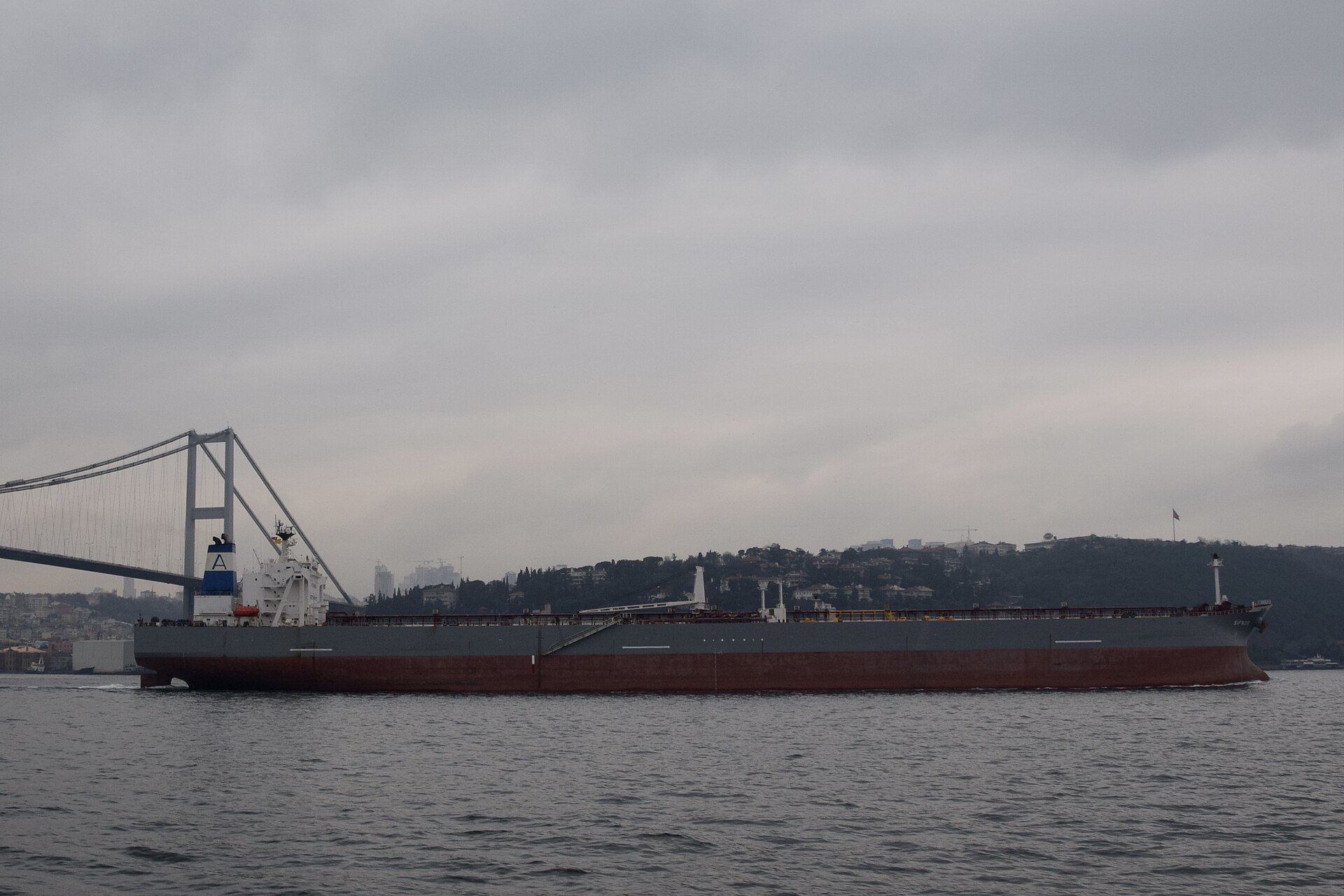
Image: Ank Kumar, CC BY-SA 4.0, via Wikimedia Commons (WHITE TRADER Crude Oil Tanker, Bosphorus Strait, Istanbul, Turkiye (Ank Kumar, Infosys Limited) 03.jpg)
Industry News
Get the headlines that matter
Shipping, maritime, and oil and gas news curated daily by the MarineCraft News Desk, with Malaysian and Southeast Asian developments front and centre.
We use your address only to send Industry News. Unsubscribe any time. See our Privacy Policy.