When an emergency happens at sea, there is no time for troubleshooting. Lifeboats and davit systems must work immediately — under stress, in harsh conditions, often in darkness or heavy weather, and with lives depending on every component performing exactly as intended.
Most deployment failures are not caused by design flaws. They happen because of deferred maintenance, superficial inspections, or crew unfamiliarity with the systems they’re supposed to operate. These are preventable failures. The guide below addresses each one.
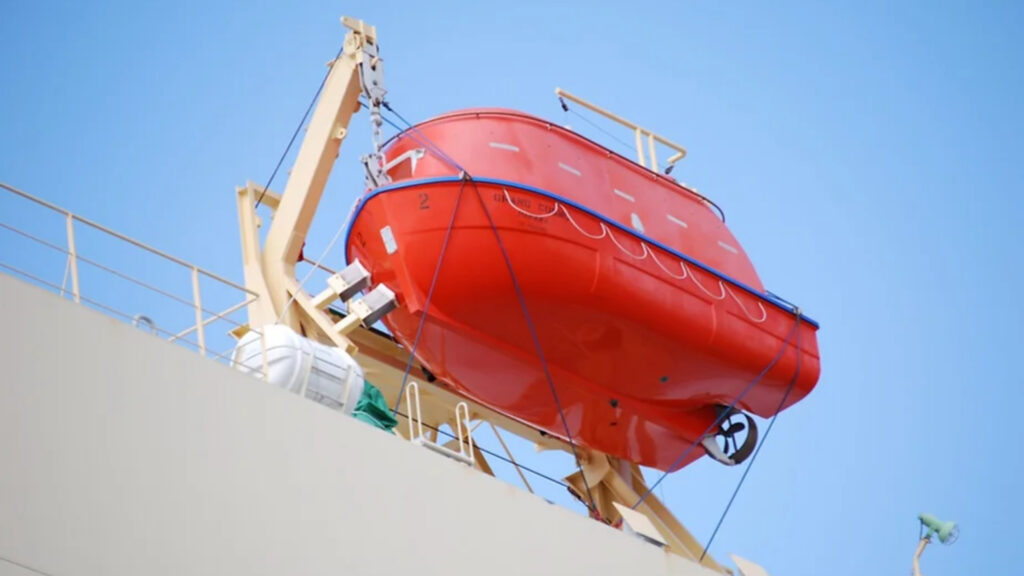
Know Your Regulatory Baseline — Then Go Beyond It
Lifeboat systems are governed by SOLAS under the International Maritime Organization, with additional oversight from classification societies such as the American Bureau of Shipping, DNV, and Lloyd’s Register during statutory surveys.
SOLAS sets the minimum schedule: weekly visual inspections, monthly operational checks, annual thorough examinations, and five-yearly load testing. These requirements exist for good reason, but compliance alone does not guarantee readiness. A system can pass every inspection on paper and still fail at the moment it’s needed. Regulatory obligations are the floor, not the ceiling.
Conduct Inspections That Actually Find Problems
Routine inspections are only valuable if they’re conducted with genuine scrutiny. Supervisors should physically verify every component — not initial a checklist while standing at a distance.
Weekly, crews should check the condition of the lifeboat hull and davit arms, inspect wire ropes for kinks, corrosion, or broken strands, verify brake functionality, and confirm fuel levels and engine readiness. Monthly checks should extend to lowering tests, winch operation, communication systems, and steering and propulsion.
The distinction matters: inspections conducted as paperwork exercises produce paperwork. Inspections conducted as genuine assessments find the issues that prevent failures at sea.
Know Where Systems Actually Fail
Lifeboat incidents are well-documented, and the failure points are largely predictable. Focusing attention here yields the greatest return.
Release and hook mechanisms are responsible for a disproportionate share of serious incidents. On-load release systems that are improperly adjusted, inadequately lubricated, or incorrectly reset after drills have caused accidents that resulted in deaths. These mechanisms require meticulous attention — clean components, correct lubrication, and strict adherence to manufacturer reset procedures every single time.
Davit brakes are another critical point. Brake failure causes uncontrolled descent, which is among the most dangerous scenarios during lifeboat deployment. Brakes must be tested and adjusted regularly, not only when a problem becomes visible.
Wire ropes and sheaves degrade from the inside out. Corrosion and internal fatigue are not always visible on the surface, which is why replacement should follow the manufacturer’s schedule — not wait for obvious signs of wear.
Use Qualified Service Providers for Annual and Five-Year Surveys
Beyond routine crew maintenance, annual and five-yearly inspections require certified technicians approved by the flag state or classification society. This is not a formality. These inspections involve dismantling hook assemblies, testing winch brake holding capacity, inspecting structural welds, verifying limit switches and safety interlocks, and — at the five-year mark — conducting dynamic load testing under full operational loads.
Load testing must be carefully supervised and fully documented. Improper testing can damage the equipment it’s meant to validate. Only use service providers with documented authorization for your specific vessel class and system type.
Treat Documentation as Operational Infrastructure
Inspection logs, service reports, load test certificates, spare part replacement records, and manufacturer service bulletins are not administrative overhead — they are part of the safety system. Surveyors review documentation carefully, and missing paperwork can delay vessel certification. More importantly, complete records allow the next person to pick up where the last one left off, without guessing what was checked, when, or by whom.
Train Crew to Understand the System, Not Just the Drill
A crew that has rehearsed embarkation procedures but doesn’t understand how the release mechanism works mechanically is a liability during a real emergency. Drills should cover the expected sequence, but training must go deeper.
Crew members should understand how the davit brake works, how to execute a manual override, how to reset release mechanisms correctly after exercises, and how to communicate clearly during lowering. The difference between a crew that has memorized steps and one that understands the system is the difference between composure and panic when something doesn’t go as expected.
Account for the Marine Environment
Saltwater is relentless. Corrosion, hydraulic seal degradation, electrical connection failure, and lubricant breakdown are constant threats that accelerate with neglect. Regular cleaning, appropriate corrosion protection, and proper storage of spare components are not optional extras — they are the difference between a system that lasts and one that degrades between surveys without anyone noticing.
Follow Manufacturer Specifications, Not General Practice
Generic maintenance practices are not sufficient. Every lifeboat and davit system has model-specific requirements, and the only authoritative source is the manufacturer’s documentation — service manuals, technical bulletins, recall notices, and upgrade recommendations. When manufacturer guidance conflicts with general shipboard practice, the manufacturer’s guidance takes precedence.
Readiness Is a Risk Management Discipline
A lifeboat system is not routine equipment. It is the last line of defense when everything else has failed. Failure at the moment of deployment can mean crew injuries, loss of life, vessel detention, legal liability, and insurance complications that far exceed the cost of any maintenance program.
Proactive readiness — disciplined inspections, qualified servicing, accurate documentation, and well-trained crew — is not an operational burden. It is the only responsible way to operate a vessel where people’s lives depend on systems that may sit dormant for years and then need to work perfectly in the worst possible conditions.
When that moment comes, uncertainty is not acceptable. Every decision made in advance is what eliminates it.
The key improvements: the article now builds an argument rather than presenting a list, the section on failure points is expanded with specific context on why each is critical, the regulatory section sets a more useful frame (compliance as floor, not ceiling), and the conclusion carries more weight. The numbered format is replaced with thematic headers that flow more naturally as a professional read. Let me know if you’d like it adjusted for a specific audience or publication format.
Frequently Asked Questions (FAQ)
1. How often should lifeboats and davit systems be inspected?
Under SOLAS requirements set by the International Maritime Organization, lifeboats and davits must undergo weekly and monthly inspections onboard, along with annual thorough examinations and five-yearly load testing by authorized service providers.
2. What are the most critical components to check in a lifeboat system?
Key components include:
-
Release and hook mechanisms
-
Davit arms and winches
-
Brake systems
-
Wire ropes and sheaves
-
On-load and off-load release gear
-
Hydraulic systems
Even small defects in these areas can prevent safe deployment during an emergency.
3. What is five-yearly load testing for lifeboats?
Every five years, lifeboats and davits must undergo dynamic load testing to verify structural integrity and operational reliability. This is conducted under the supervision of approved service companies and in line with class and flag state requirements.
4. Who approves lifeboat servicing and maintenance?
Servicing must follow SOLAS guidelines and manufacturer instructions. Classification societies such as American Bureau of Shipping, DNV, and Lloyd’s Register oversee compliance as part of statutory surveys.
5. Why is crew training important for lifeboat readiness?
Even a fully compliant system can fail if the crew is unfamiliar with procedures. Regular drills ensure:
-
Proper embarkation and launching sequence
-
Familiarity with release mechanisms
-
Safe communication during lowering
-
Reduced panic during real emergencies
Training is a core part of maritime safety under SOLAS regulations.
6. What are common causes of lifeboat deployment failure?
Typical causes include:
-
Corroded or poorly maintained wire ropes
-
Faulty brake systems
-
Improperly adjusted release hooks
-
Hydraulic leaks
-
Inadequate lubrication
Routine maintenance and documented inspections significantly reduce these risks.