Introduction: Measuring the Weight of Ships
When we talk about the “weight” of a ship, we usually mean displacement—the mass of the ship plus everything it carries, equal to the weight of the water displaced to stay afloat (Archimedes’ principle).
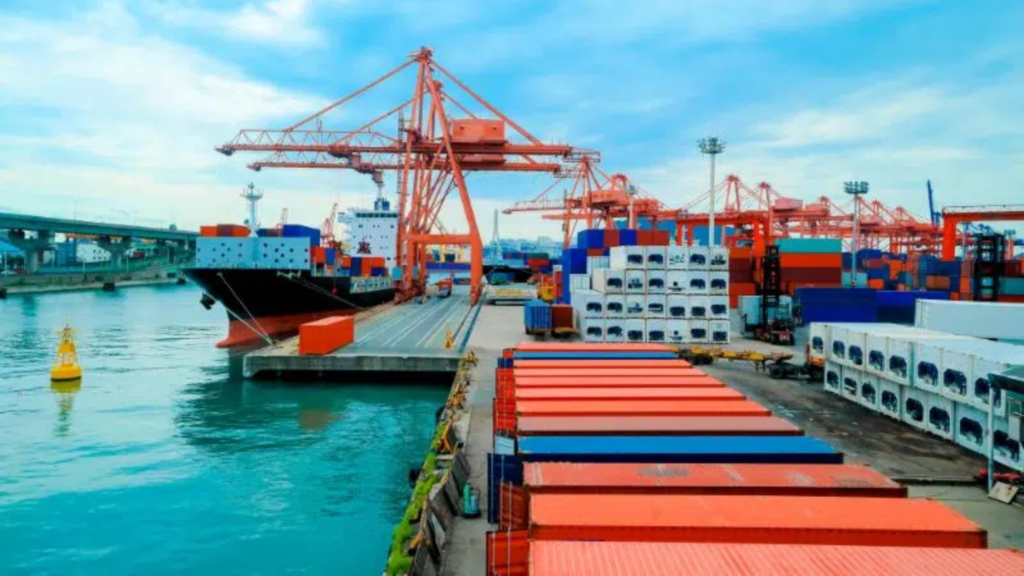
Displacement is often divided into two parts:
- Lightweight: the weight of the ship itself, including its structure, systems, machinery, and fittings.
- Deadweight: the carrying capacity—cargo, fuel, ballast, water, provisions, crew, passengers, and consumables.
Thus, a ship in its lightship condition carries no deadweight items. But in practice, different types of cargo vessels are measured differently, depending on their purpose.
Common Measurement Terms
- Deadweight Tonnage (DWT): The maximum weight of cargo and consumables a ship can carry.
- Gross Tonnage (GT): Based on the ship’s total internal volume.
- Net Tonnage (NT): Based on the revenue-earning spaces, such as cargo holds or passenger cabins.
While DWT measures carrying capacity in weight, GT and NT measure internal space.
Bulk Carriers
Bulk carriers transport dry commodities such as coal, ore, or grain. They are typically defined by DWT.
- Range from 500 tonnes to 300,000 tonnes.
- The largest, Pacific Flourish, can carry nearly 400,000 tonnes.
- Subtypes include ore carriers, coal carriers, and timber carriers—all measured by DWT.
Tankers
Tankers carry liquid cargo, such as crude oil, chemicals, or liquefied gas. Like bulkers, their capacity is also defined by DWT, with additional reference to GT and NT.
- Small tankers: ~500 DWT
- Very large crude carriers (VLCCs) and ultra-large crude carriers (ULCCs): 300,000–400,000 DWT+
Containerships
Container ships are measured not by weight but by TEU (Twenty-foot Equivalent Units), the number of standard containers they can carry.
- A 10,000 TEU containership can carry 10,000 standard 20-foot containers, or 5,000 40-foot containers, or a combination of the two.
- TEU capacity defines operational scale more clearly than tonnage.
Ro-Ro and Ro-Pax Vessels
Ro-Ro (Roll-on/Roll-off) vessels carry wheeled cargo like cars and trucks, measured in lane metres, where 1 lane metre = 2 square metres of deck space.
- The total capacity depends on available lane metres and vehicle size.
- Ro-Pax vessels combine Ro-Ro cargo with passenger capacity, expressed as lane metres plus maximum passengers.
Conclusion: Different Ships, Different Measures
The carrying capacity of a cargo ship depends on its type:
- Bulk carriers and tankers: Deadweight tonnage (DWT).
- Containerships: Number of TEUs.
- Ro-Ro ships: Lane metres or number of vehicles.
- Ro-Pax ships: Lane metres plus passenger count.
While displacement gives the overall weight of a vessel, industry practice uses specific measures—DWT, GT, NT, TEUs, or lane metres—to define capacity. This diversity in measurement reflects the varied nature of global shipping and its central role in moving everything from grain and crude oil to cars and consumer goods.