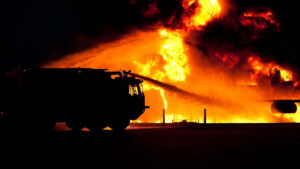
Fire at sea leaves little room for error. Space is limited, evacuation options are constrained, and the wrong suppression system can cause as much damage as the fire itself. CO₂, foam, and water mist systems are all widely used across commercial vessels, offshore units, and passenger ships — but each serves a distinct purpose. The […]
Welding & Fitting Training Standards in Malaysia: What Employers Need to Know

Hiring welders and fitters in Malaysia isn’t simply about filling vacancies — it’s about ensuring workers meet recognized standards, pass rigorous inspections, and perform safely under real production pressure. For employers in shipbuilding, oil and gas, fabrication, and construction, understanding the country’s certification landscape is essential to managing risk and delivering quality outcomes. Here’s what […]
End-to-End Manpower Supply for Shipyards | Industry Guide
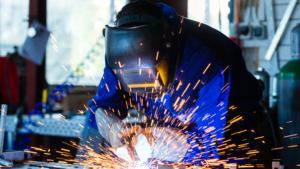
A Comprehensive Industry Guide Shipyards don’t run on machines alone — they run on people. Welders fitting hull sections under relentless deadlines. Engineers navigating classification compliance. Supervisors orchestrating dozens of trades across multiple build blocks. When manpower planning breaks down, schedules slip, costs escalate, and quality suffers. End-to-end manpower supply addresses the entire workforce lifecycle […]
Lifesaving Equipment for Marine & Offshore Operators
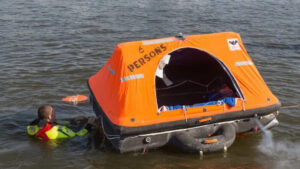
Marine and offshore operations present some of the highest-risk industrial environments globally. Personnel operate in remote waters, harsh weather conditions, hydrocarbon processing zones, and heavy industrial settings where emergency response time is limited. In these environments, lifesaving equipment is not an accessory — it is a critical survival system. Marine and offshore operations present some […]
Essential Lifesaving Appliances Every Vessel Must Maintain Under SOLAS
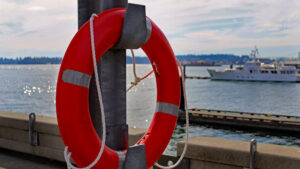
Lifesaving appliances are a fundamental component of maritime safety, providing the means for safe evacuation and survival when incidents such as fire, collision, grounding, or abandonment occur. Under SOLAS Chapter III and the Life Saving Appliances Code, vessels and offshore units are required to carry and maintain specific lifesaving equipment to protect all persons onboard. […]
SOLAS Explained
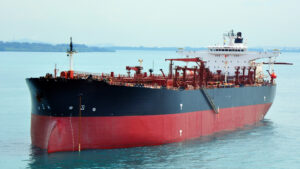
Understanding the foundation of international maritime safety Why SOLAS matters The International Convention for the Safety of Life at Sea, commonly known as SOLAS, is the cornerstone of maritime safety regulation. Introduced to protect lives and assets at sea, SOLAS sets comprehensive standards for the construction, equipment, and operation of ships. It ensures that every […]